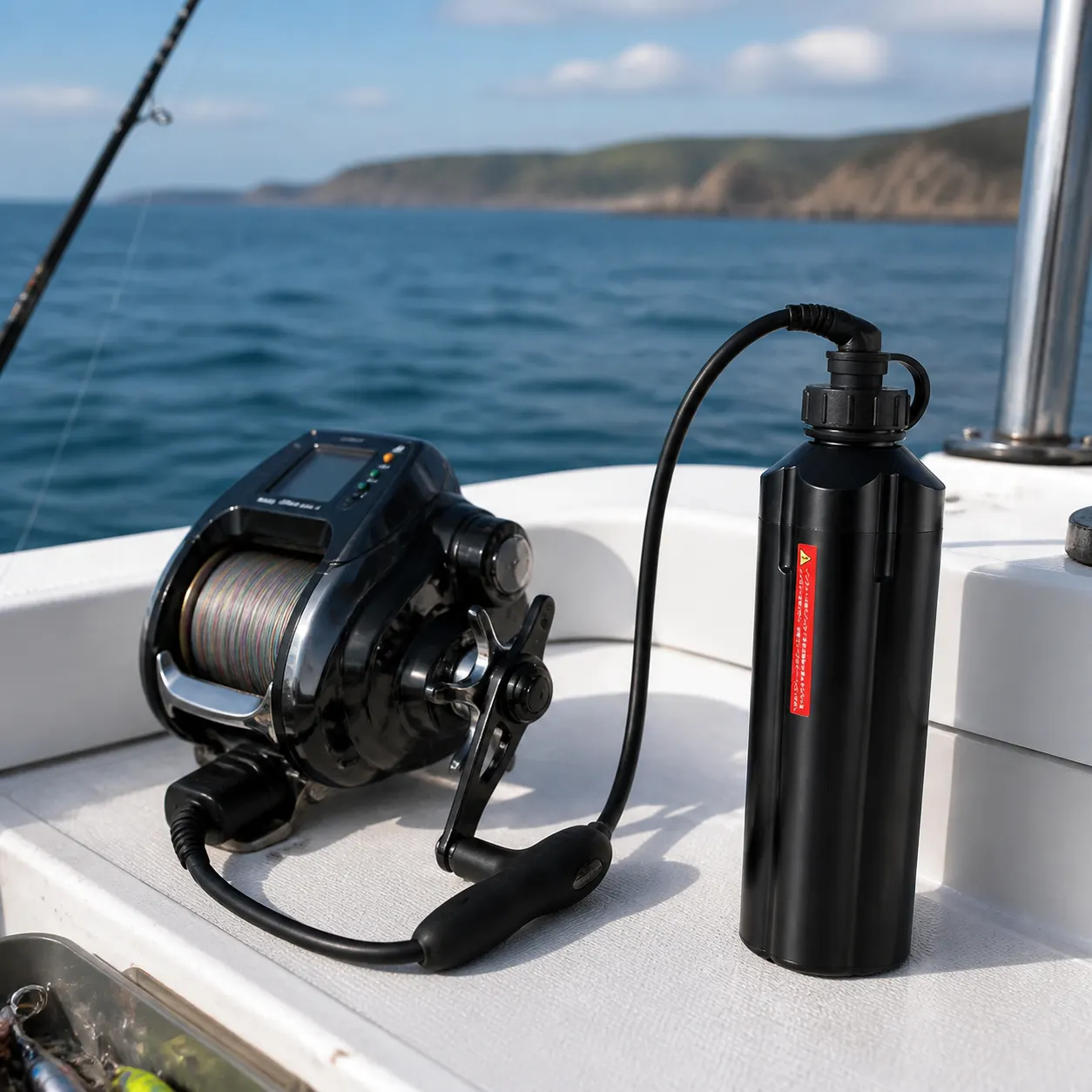
Choose the battery by matching the reel first
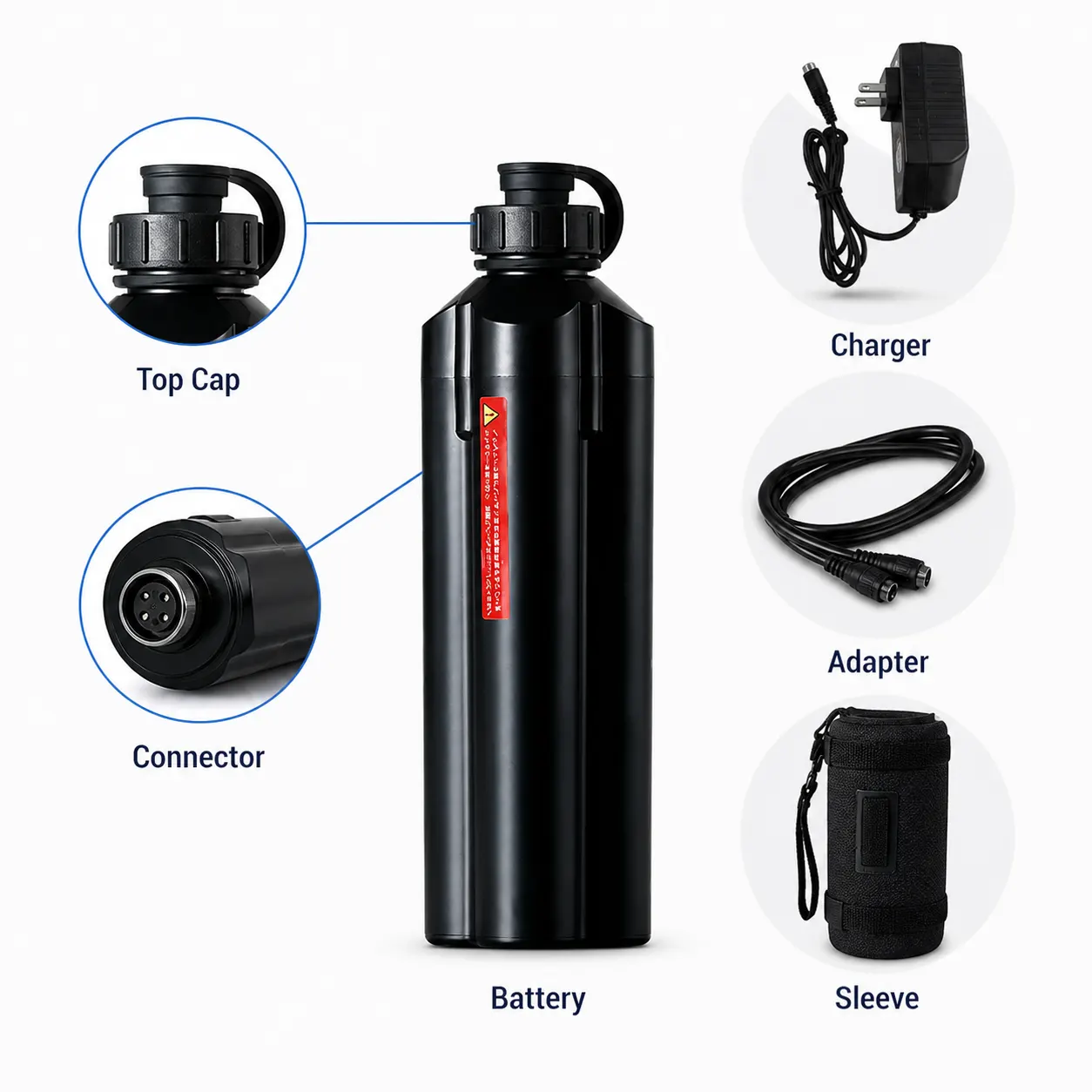
If you are searching for an electric fishing reel battery UK option, start with the reel rather than the battery listing. The useful first check is whether your reel is meant to run from a 14.8V class battery and whether the connection can be made with the supplied adapter lead. The documented kit here is a 14.8V 10000mAh Li-ion fishing reel battery kit, supplied without a power display, with a charger, a 40cm adapter cable and a cloth sleeve. That makes it a battery kit to assess for compatible electric reel use, not a general phone power bank, fish-finder battery, or charger-only purchase.
For a Plymouth charter, this matters before you even pack the tackle bag. Repeated drops, deep water, heavy weights and bait checks can turn manual winding into the tiring part of the day. An electric reel can help with that job, but only if the power setup is simple enough to use on a moving deck. A compact kit can be attractive because it avoids depending on a shared boat outlet or a heavy leisure battery, but the decision still comes down to confirmed voltage, connector fit, cable placement and your plan for managing charge without a display.
Set the Plymouth charter bench up before leaving home
Treat the kitchen table, garage shelf or packing bench as the first test station. Lay out the reel, battery, charger, adapter cable and sleeve together, then check the order of use while you are not under time pressure. The listed kit contents are specific: battery, charger, 40cm adapter cable and cloth sleeve. That is enough to build a practical pre-trip check, but it is not a promise that every electric reel will connect without checking. The most avoidable mistake is discovering a connector or voltage mismatch when the boat is already leaving the quay.
The no-display point deserves attention at this stage. Because this selected kit has no power display, you should not plan around glancing at a remaining-charge screen during the trip. A sensible routine is to charge before the session, confirm the connection, pack the cable deliberately, and plan conservatively for an important booking. If the trip is critical, long, or likely to involve repeated deep drops, a backup power plan may be worth considering. That is not because this kit is unsuitable by default; it is because no-display batteries ask the angler to manage uncertainty before the day starts.
Check the documented facts against your reel and cable route
The documented facts are narrow, which is useful because they keep the buying decision honest. The kit is described as a 14.8V 10000mAh Li-ion battery kit for fishing-reel battery use. It is supplied without a power display and includes a charger, a 40cm adapter cable and a cloth sleeve. The listed attributes state fishing-reel battery applications, and BMS protection appears as a listed claim. Those details give you a checklist, but they do not replace your reel manual, connector inspection or a careful look at how you stand and move while fishing.
The 40cm adapter cable is one of the most practical facts to test mentally. If you want the battery close to the reel, belt, bag or rod area, that length may be neat and less prone to loose deck clutter. If you prefer the battery further away, or you need a longer route around clothing, railings, a tackle box or a rod rest, 40cm may feel limiting. Do not assume one carry method is best. The right answer depends on your reel, your stance, how often you move, and whether the battery position makes the rod feel awkward.
Understand what 10000mAh can and cannot tell you
The 10000mAh capacity figure is helpful, but it should not be read as a guaranteed runtime for a whole charter. Electric reel power demand varies with depth, load, frequency of retrieval, line weight, sinker weight and how often you check bait. The documented facts support saying that this is a 10000mAh reel battery kit; they do not support claiming a fixed number of hours, drops or fish. A careful buyer should use capacity as one planning input, then add the actual trip conditions and the importance of the booking.
For anglers moving from heavier boat batteries or improvised power leads, the appeal is often tidier handling rather than a magic endurance claim. A compact reel battery can reduce dependence on long leads and shared outlets, but you still need to think like someone preparing for sea fishing, not like someone charging a phone at home. If the day involves deeper water and repeated powered retrievals, plan more conservatively. If the session is shorter or the reel is used only for parts of the trip, the same capacity may feel easier to manage. The product fact stays the same; the fishing job changes the risk.
Know when the no-display kit is the wrong fit
A no-display kit suits anglers who are comfortable charging fully before leaving and managing the day without a visible battery percentage. It may not suit a beginner who wants constant reassurance, a charter angler who dislikes uncertainty, or anyone who needs to monitor remaining power closely during a long session. The absence of a display is not automatically a flaw, but it changes the habit required. You are choosing a simpler kit, so the planning has to happen before you get to the pontoon.
There are other possible mismatches. Do not buy only because the listing mentions fishing-reel battery applications if you have not checked your reel’s voltage requirement and connector arrangement. Do not buy if you need a longer cable route than 40cm can reasonably support. Do not treat the cloth sleeve as a licence for careless handling in a wet, knocked-about deck environment. And do not treat a listed BMS protection claim as permission to improvise wiring. The more expensive mistake is not choosing a modest kit; it is forcing a battery into a setup it was not checked for.
Use this packing-bench checklist before a booked trip
Before a paid charter or private boat day, work through the same checks in the same order. First, confirm your electric reel is intended for a 14.8V class battery. Second, inspect the connector and confirm whether the supplied adapter cable is the right route for your reel. Third, check whether 40cm is enough for your preferred carry position, whether that is close to the rod, in a pocket, beside a tackle bag or near your seat. Fourth, charge the battery before leaving. Fifth, pack the charger, adapter cable and cloth sleeve deliberately, not loose among spare tackle.
Then make a realistic trip decision. If you are fishing deep water from Plymouth with repeated drops, heavy gear and no easy chance to stop, consider whether a backup arrangement is sensible. If you are new to electric reels, run the connection check at home so the first use is not on a moving boat. If you are choosing this kit because it is compact, check that the battery position does not add awkward weight or restrict movement. The checklist is deliberately practical: voltage, cable, charger, carry position, no-display planning and backup for critical sessions.
Compare a dedicated kit with improvised boat power
A dedicated reel battery kit and an improvised boat-power setup solve the same broad problem in different ways. The kit route gives you a defined battery, charger, adapter cable and sleeve in one purchase, which can make packing cleaner. It may also reduce dependence on a shared outlet or a long lead across the deck. That matters on a charter where space, movement and rod positions change during the day. The trade-off is that you must check compatibility carefully and manage the no-display battery through pre-trip charging and conservative planning.
Improvised power can look appealing if there is already a boat battery, socket or other supply nearby, but it raises more questions for many anglers: voltage, connectors, cable length, routing, strain on leads and whether the setup gets in someone’s way. This article is not saying one method is always superior. It is saying the cleaner choice is usually the one with fewer unknowns. If a 14.8V 10000mAh kit with charger, 40cm adapter cable and sleeve matches your reel and fishing style, it gives you a clear object to pack and test. If it does not match, the neatness does not matter.
Make the next step a compatibility decision, not a guess
The grounded next step is simple: compare the documented kit facts with your reel, your trip and your carry method before ordering. The public facts to use are the 14.8V rating, 10000mAh capacity, Li-ion battery type, no power display, included charger, 40cm adapter cable, cloth sleeve and stated fishing-reel battery application. If those line up with your reel requirements and your boat-day routine, the kit is worth considering as a compact power setup for compatible electric reel use.
For UK buyers, also check the purchase page details that affect the practical order, including the displayed GBP price, VAT wording and delivery information shown at the point of purchase. Those details help with timing a charter preparation, but they do not replace the technical checks. The best buying decision is boring in the right way: confirm the reel, confirm the cable, charge before the trip, pack the full kit, and avoid making the first real test on the morning of a paid fishing day.